Railway Signaling Backup Power: Eliminating the Single Point of Failure
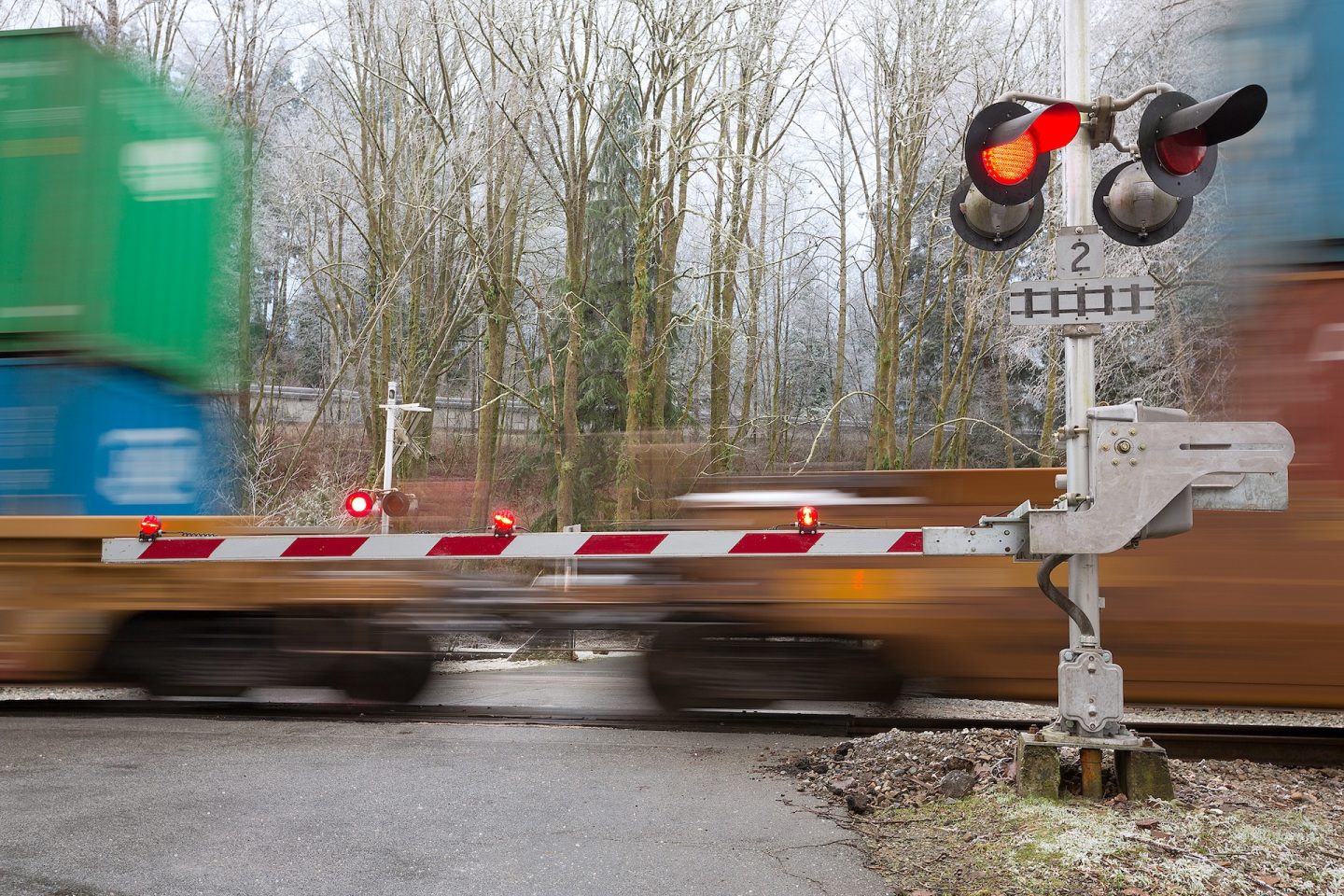
Rail signals fail because power distribution fails first. It fails when a dual-control switch machine loses terminal voltage mid-stroke, leaving the points unlocked. It happens when a grade crossing warning system drops its gates because of a momentary voltage sag, or when a coded track circuit drops out and falsely indicates a block is occupied.
While North American rail networks frequently feature robust redundancy within logic systems and vital relays, the primary utility feed is often left as a critical single point of failure. When the utility grid falters, operations rely entirely on the backup power housed inside the wayside bungalow.
That is a manageable risk in mild weather, but a compounding operational crisis when temperatures drop.
Cold Weather Battery Performance and Electrochemical Failure
Most rail corridors in the U.S. and Canada run through open plains and mountain passes where winter routinely plummet to -35°C or worse. At these temperatures, conventional Valve-Regulated Lead-Acid (VRLA) batteries, which have powered wayside bungalows for decades, lose capacity fast in extreme cold. It drastically slows down the internal chemical reaction rate of a lead-acid cell. Under standard operating conditions (20ºC to 25ºC), a battery string might easily deliver its rated 8-to-10-hour runtime. At -30°C, that available capacity can instantly shrink by up to 50%.
If a severe winter storm downs local utility lines, a degraded battery bank will fail long before utility crews can clear snow-blocked access roads to reach the site.
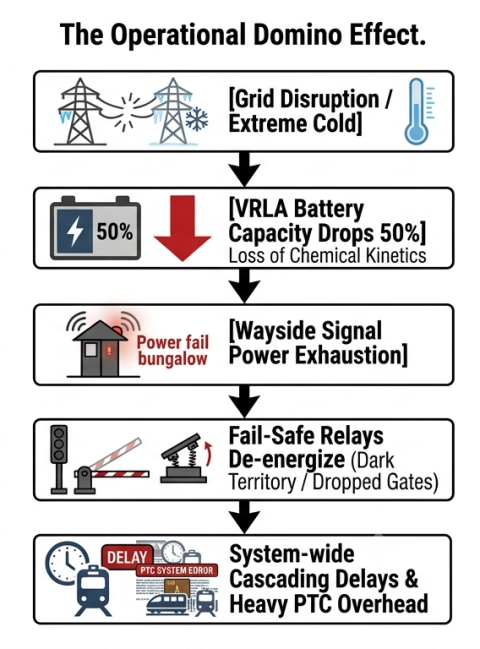
When wayside power is lost, crucial fail-safe relays de-energize. Signals go dark, crossing gates drop, and track circuits open. In the era of Positive Train Control (PTC), a single unpowered wayside bungalow doesn’t just stop one train but also triggers restrictive speed limits. This forces manual block authority protocols, and creates cascading delays.
Why Rail Signal Power Reliability Demands Next-Gen Batteries
The rail industry is actively addressing these concerns. At Railway Interchange 2026, one of North America’s largest rail industry events, the focus has shifted heavily toward ruggedized, climate-resilient infrastructure. Top-tier suppliers are moving away from legacy chemistry toward cold-weather-tolerant Lithium Iron Phosphate (LiFePO4) or advanced Pure Lead (TPPL) monoblocs designed to maintain high discharge rates even in sub-zero environments.
But upgrading the battery chemistry only solves half the problem. Sensitive vital microprocessors, solid-state interlockings, and radio telemetry modules don’t just need run-time during a total blackout. They require continuous, clean power during normal operations. An aging utility grid constantly subjects wayside equipment to transients, voltage sags, swells, and electrical noise. These minor, repetitive power quality anomalies degrade delicate silicon over time, causing intermittent “ghost” faults that are notoriously difficult for signal maintainers to diagnose.
UPS Deploying Industrial Wayside UPS Systems with Online Double-Conversion Topology
Wayside signaling requires a true, industrial-grade Uninterruptible Power Supply (UPS) and not a commercial-grade battery backup modified for a rail rack.
A ruggedized UPS utilizing an online double-conversion topology acts as an absolute firewall between the unstable utility grid and your critical signaling logic. By continuously converting incoming AC to DC, and then synthesizing a perfect, regulated AC sine wave output, the UPS completely isolates sensitive wayside electronics from utility-side disturbances.
When the utility grid suffers a complete outage, the inverter draws seamlessly from the battery bank with zero transfer time (0 ms). The vital logic controller never sees a microsecond of voltage drop, preventing microprocessor reboots and keeping signal blocks green.
For rail systems engineers and procurement buyers, specifying a cold-weather-rated UPS isn’t just about surviving the next winter storm. It is about hardening the network, protecting sensitive solid-state assets from utility wear-and-tear, and ensuring that your backup plan has an unbreakable backup plan of its own.
Key Takeaways
- The Primary Failure Vector: Railway signaling systems often fail not because of logic errors, but because utility power outages and severe voltage sags de-energize critical wayside relays and switch machines.
- Cold-Weather Battery Derating: Standard VRLA battery capacity drops by up to 50% at -30°C due to degraded chemical kinetics, leaving wayside bungalows vulnerable during severe winter grid disruptions.
- Cascading Operational Impact: In Positive Train Control (PTC) environments, a single unpowered wayside bungalow triggers automatic restrictive speeds, forces manual block authority protocols, and creates network-wide delays.
- Grid Isolation via Online Double-Conversion: Deploying an industrial-grade wayside UPS with online double-conversion topology isolates vital microprocessors from grid noise, transients, and sags while ensuring continuous regulated power.
- Zero Transfer Time (0 ms): True online double-conversion systems draw from battery banks with zero interruption, preventing logic controller reboots and keeping signal blocks green without a microsecond of voltage drop.
Latest Posts
Telecom UPS Systems: Powering Connectivity & Critical Infrastructure
The telecommunications industry is the backbone of our connected world, enabling everything from daily communications to mission-critical infrastructure. But that backbone is only as strong as… Read Post
Lithium-Ion UPS Battery vs. VRLA: The TCO Equation for Modern Data Centers
For decades, the data center industry has relied on a familiar, heavy, and high-maintenance technology to keep the lights on during power anomalies: the Valve… Read Post
How AI Workloads Are Redefining UPS for Data Centers
Traditional data centers were designed for workload that requires around 15 kW per rack. The numbers have changed since AI was introduced, pushing workloads even up to 120 kW per rack,…Read Post